Six Communes, One City, and What Cran-Gevrier Kept
The 2017 fusion that produced modern Annecy was not a takeover — it was an assembly of six distinct municipalities, each arriving with its own infrastructure, fiscal history, and sense of place.
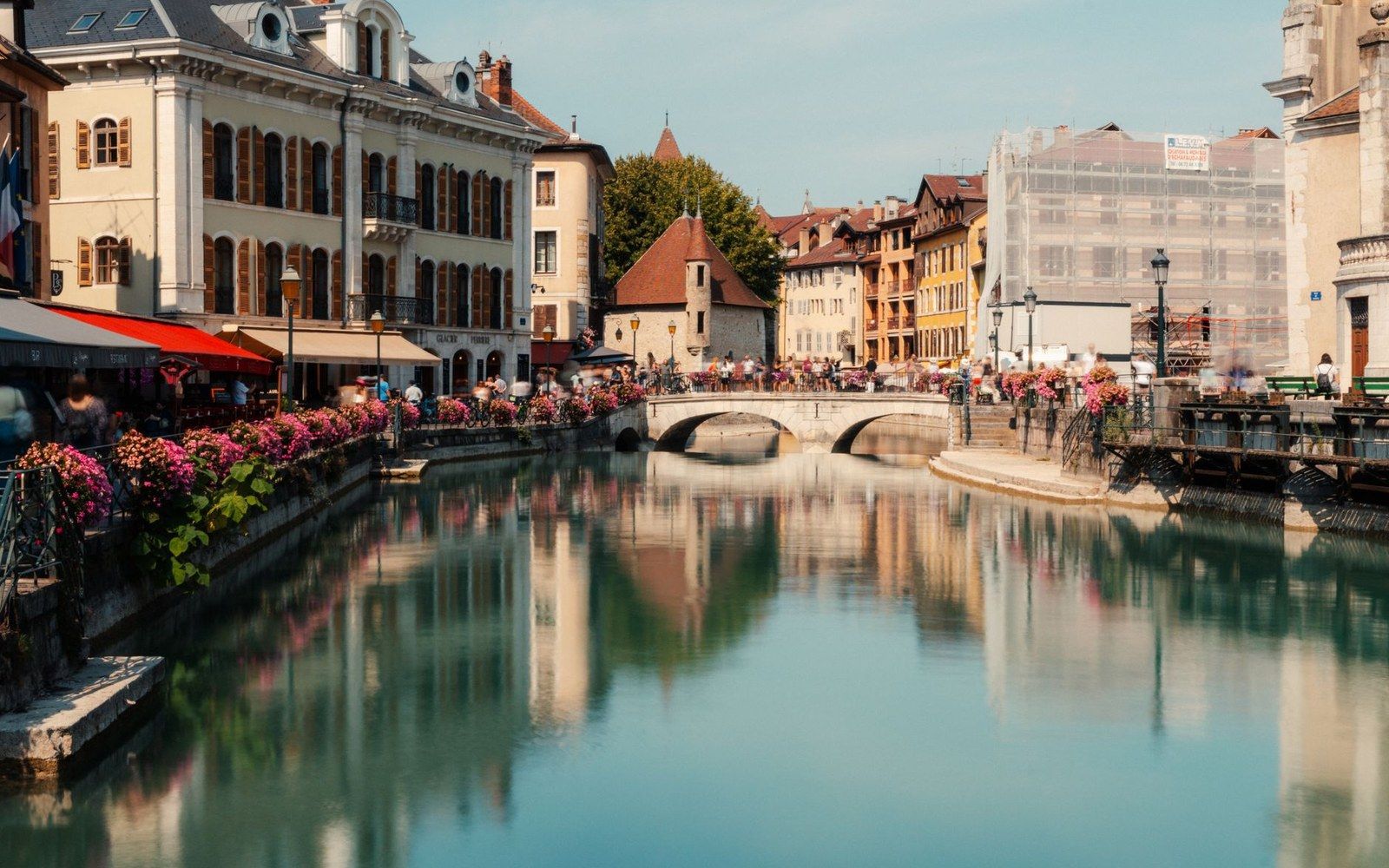
Six communes became one Annecy in 2017. Cran-Gevrier was among them, and the name survives on this masthead.Photo: HAMZA YAICH / Pexels
What the Merger Assembled
On 1 January 2017, the six communes of Annecy, Cran-Gevrier, Seynod, Meythet, Pringy, and Annecy-le-Vieux ceased to exist as separate legal entities and were merged by prefectoral decree into a single commune nouvelle — the French administrative category created by the 2010 Loi de réforme des collectivités territoriales and refined by the 2015 Loi NOTRe. The resulting city took the name Annecy, a population of roughly 126,000 at the time of fusion, and a municipal territory that stretched from the industrial banks of the Thiou canal to the agricultural plateau above Pringy.
The six communes were not equals in size or function. The historical centre — old Annecy — had long served as the departmental capital of Haute-Savoie and held the prefecture, the courts, and the lakefront. Annecy-le-Vieux occupied the upper eastern shore, wealthier and residentially dense. Seynod, to the south, was the largest by land area and contained significant commercial and logistics activity along the Route d'Albertville corridor. Meythet, to the northwest, bordered the Annecy-Meythet airport and housed industrial employers. Pringy formed the northern edge of the agglomeration, where urban fabric gave way to farmland.
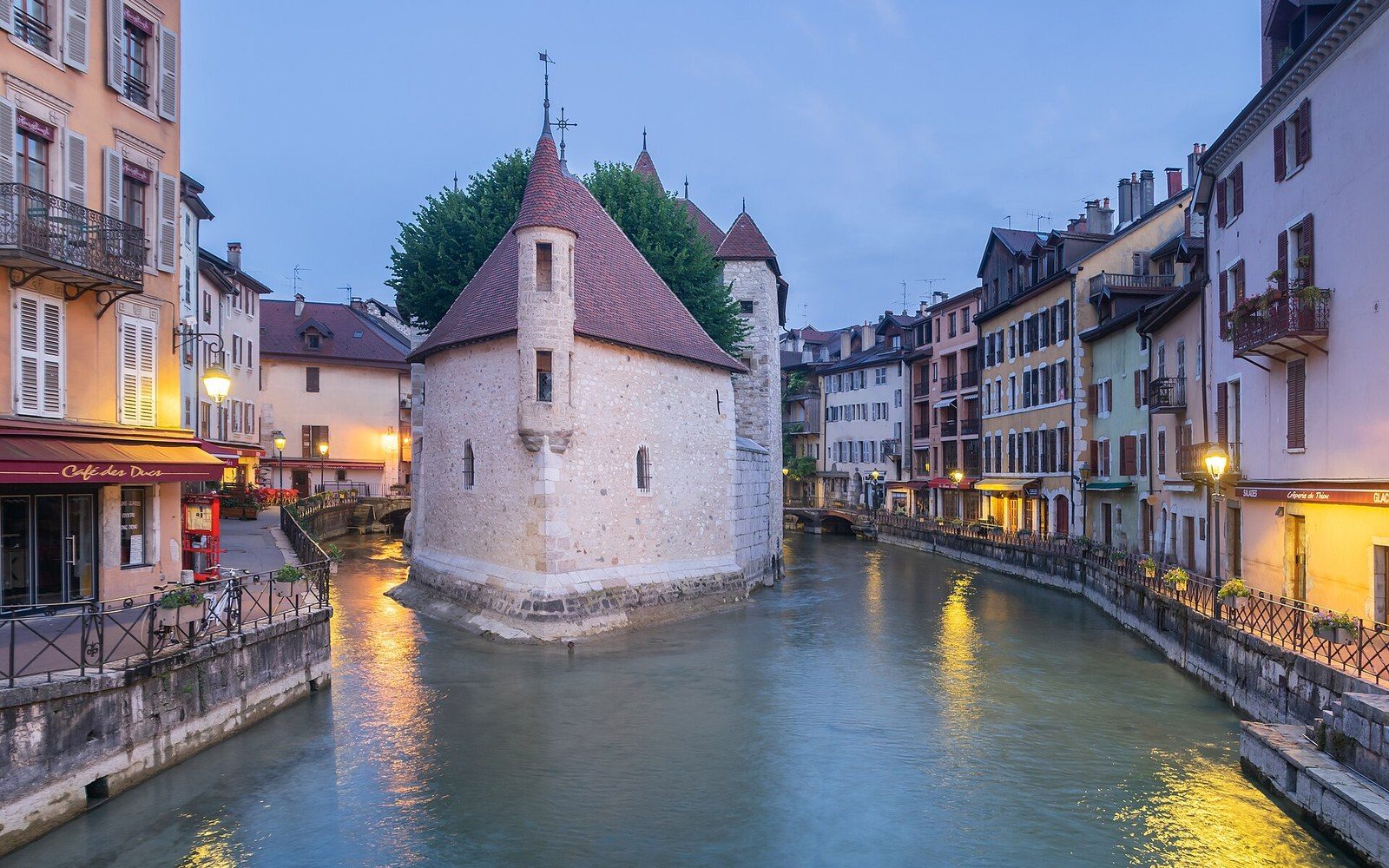
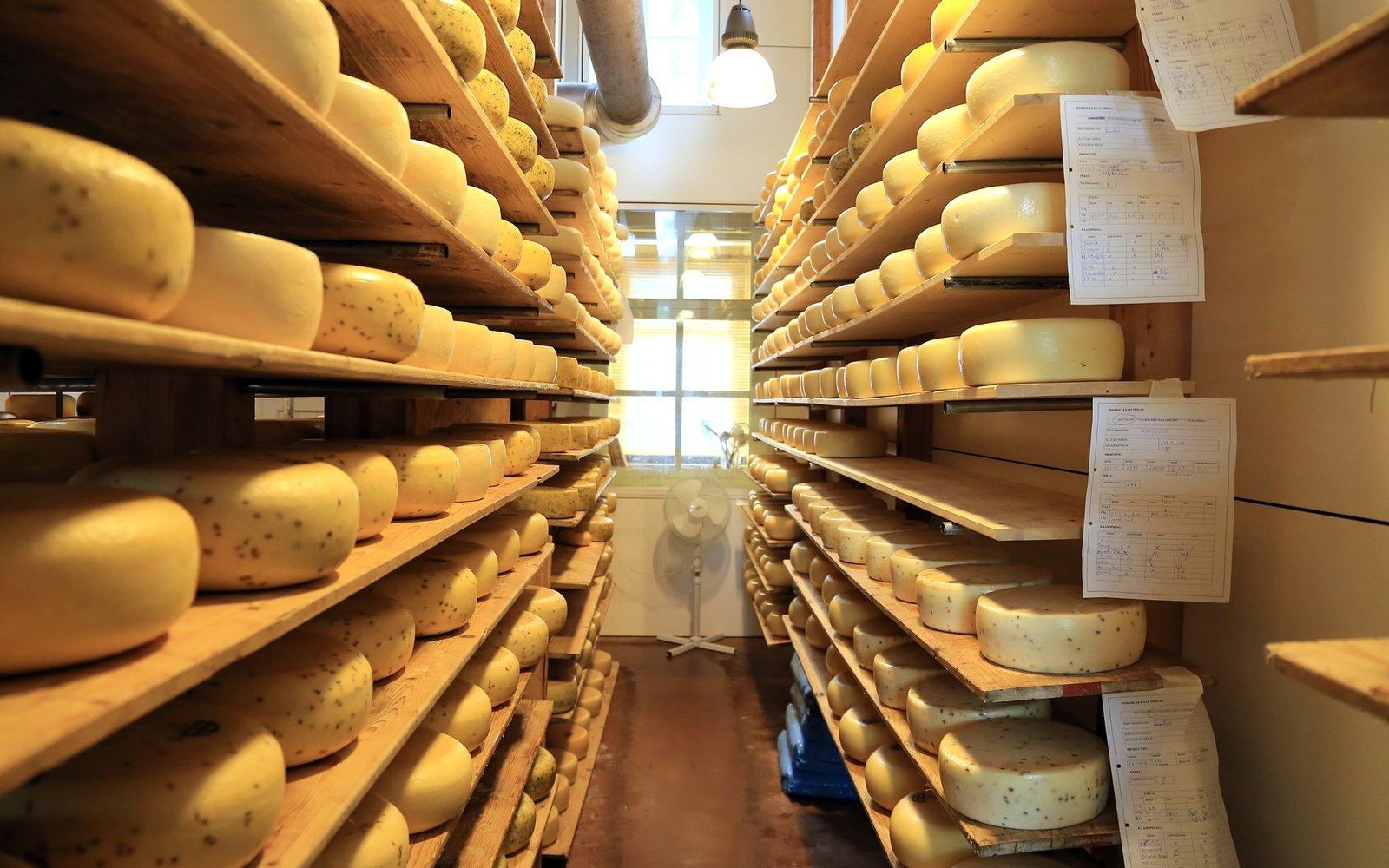
The Thiou canal leaving the lake. Cran-Gevrier lies a short way downstream, inside the commune assembled in 2017.Photo: Palais de l'Isle in Annecy 11 · Wikimedia CommonsWheels in an affinage cellar. The Beaufort production zone occupies the same altitudes as the lift network above it.Photo: Theo Graber / Pexels
Cran-Gevrier occupied the western bank of the Thiou, directly across from the old town, and arrived at the merger with a specific inherited character: a working-class manufacturing district whose twentieth-century identity had been shaped by the bearing and precision-engineering industries that colonised the Thiou valley from the late nineteenth century onward. By the time of the merger those industries had largely restructured or departed, but the built environment — wide residential blocks, a tight commercial core along the Avenue de Brogny, the Courier cultural centre — retained the morphology of a distinct urban district rather than a suburb.
What the New Structure Preserved
French law on communes nouvelles provides for a transitional mechanism: former communes may be designated communes déléguées — delegated communes — retaining their own mayor, a local deliberative chamber, and civil-registration functions for a period defined by the merged council. Annecy's merger agreement designated each of the five absorbed municipalities as a commune déléguée, with Annecy itself serving as the administrative seat. This meant that, legally, Cran-Gevrier continued to exist as a named administrative unit within the new city, with a delegated mayor able to manage local matters and maintain a documentary identity. The merged council has the authority to dissolve the commune déléguée structure by vote, but as of the period following merger, the delegated arrangement was preserved.
The fiscal consequence of merging was significant. Each commune had carried its own debt, its own taxe foncière base, and its own public service commitments. The fusion pooled these under a single budget while allowing a transitional equalisation of tax rates across the territory — a process the French tax code staggers over several years to prevent immediate rate shocks for property owners. For Cran-Gevrier residents, whose commune had historically maintained a distinct tax base tied to industrial rateable values, the equalisation carried real arithmetic consequences.
The six communes — what each brought
Annecy
departmental capital, lakefront, prefecture and courts
Cran-Gevrier
industrial western bank, Thiou corridor, working-class residential fabric
Seynod
largest by land area, commercial and logistics strip along Route d'Albertville
northern plateau, transitional zone between urban and agricultural land
Governance shifted to a single municipal council seated at the Hôtel de Ville in the historic centre. The council's size — elected in 2020 under the merged city's first post-fusion municipal elections — reflected the combined population. Cran-Gevrier's delegated mayor held a seat on that council, a structural echo of the former commune's independent standing rather than an exercise of independent authority.
What the merger did not erase was geography. The Thiou still divides the western districts from the old town. The Avenue de Brogny still runs its own commercial logic. Lac d'Annecy, whose documented water-quality record is one of the longest in Europe, remains a shared resource governed now by a single municipal authority rather than a patchwork of six. In that sense the merger rationalised the lake's stewardship even as it absorbed the distinct histories of the communes around it.