What a Commune Still Owns Once the Cable Comes Down
When La Morte decided to stop running Alpe du Grand Serre in 2024, it did not simply close a ski area. It became the legal owner of a complex infrastructure — lifts, snowmaking ponds, grooming tracks and earthworks — for which the economics of winter sport no longer made sense but the obligations of public land management do not disappear.
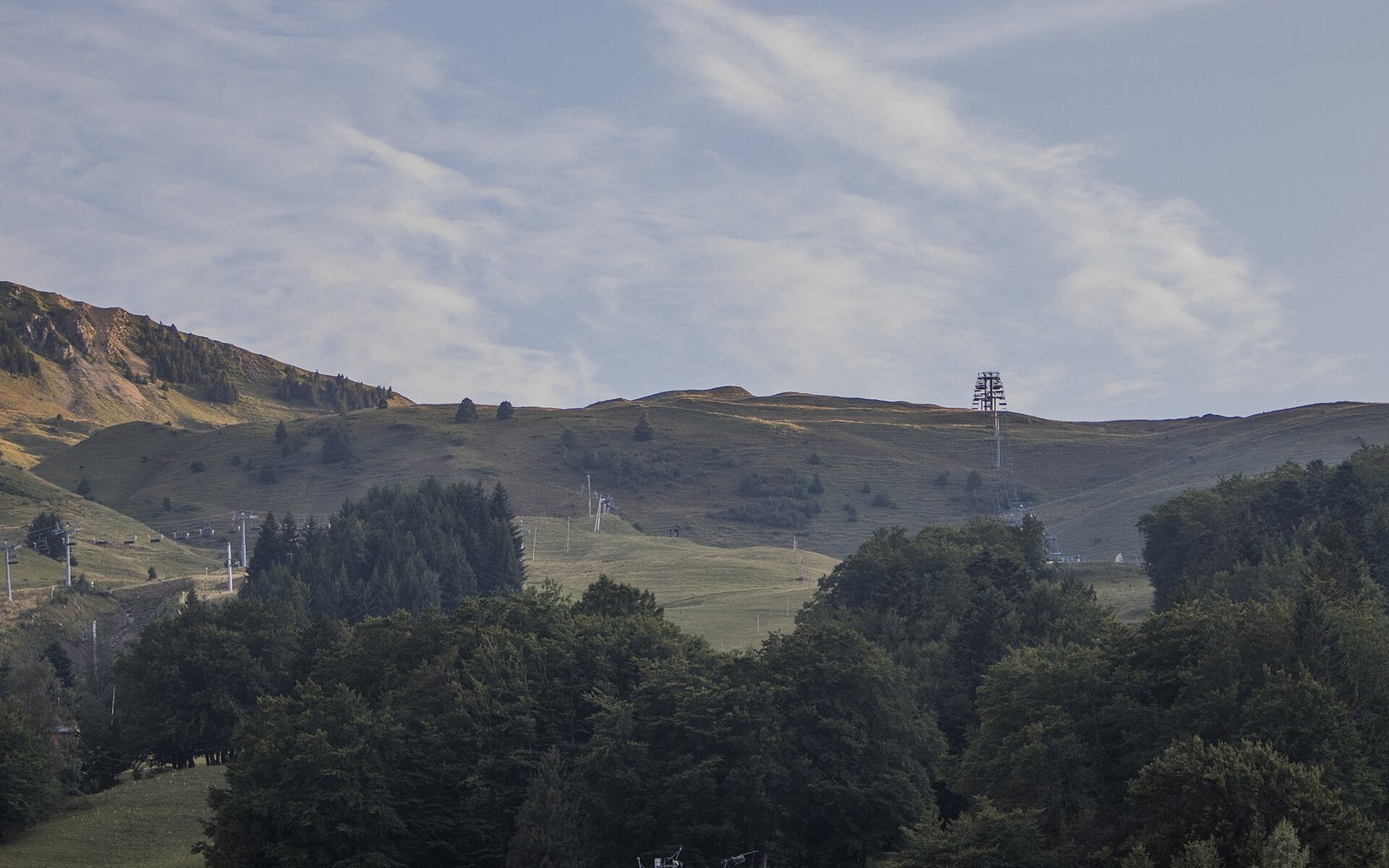
The Alpe du Grand Serre tops out near 2,200 metres but earned its living far below that line.Photo: Alpe du Grand Serre summer · Wikimedia Commons
The Decision and Its Arithmetic
Alpe du Grand Serre sits in the Isère département, above the village of La Morte in the Matheysine plateau country south of Grenoble. The ski area reaches around 2,200 metres at its highest point, but the bulk of its runs operated considerably lower, at altitudes where Météo-France projections under the Climsnow programme have documented a steady reduction in reliable natural snow cover across the French Alps. The area was never large by the standards of the Tarentaise giants — no interconnected domaine skiable drawing visitors from across Europe, no Compagnie des Alpes balance sheet absorbing a difficult winter. It was a small, municipally run operation serving a local and regional public.
The commune's decision in 2024 to cease operations followed a pattern visible at dozens of lower and mid-altitude stations in the French Alps over the preceding decade. The arithmetic is not complicated. A ski area at this elevation generates revenue in skier-days — the industry unit, as counted by Domaines Skiables de France, of a single passage through a lift turnstile. When snow cover becomes shorter, less reliable or absent in critical early-season weeks, skier-days fall. Fixed costs — lift maintenance, snowmaking infrastructure, PGHM coordination, liability insurance, piste-bashing contracts — do not fall proportionately. At some point the gap between income and obligation becomes structural rather than cyclical, and a commune that runs a ski area on a concession de remontées mécaniques basis faces a choice no private operator would defer as long: absorb the deficit from the municipal budget, or end the operation.
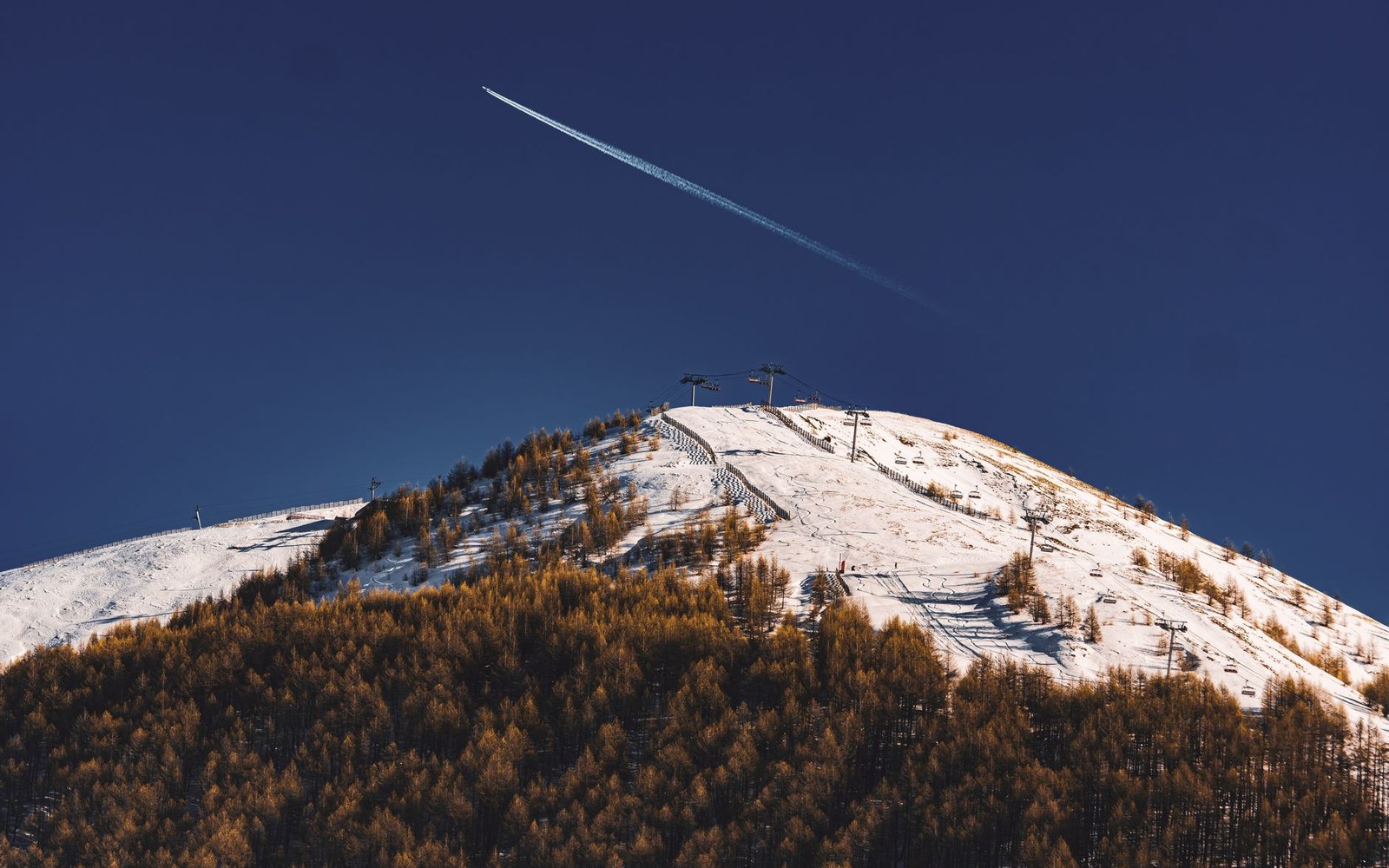
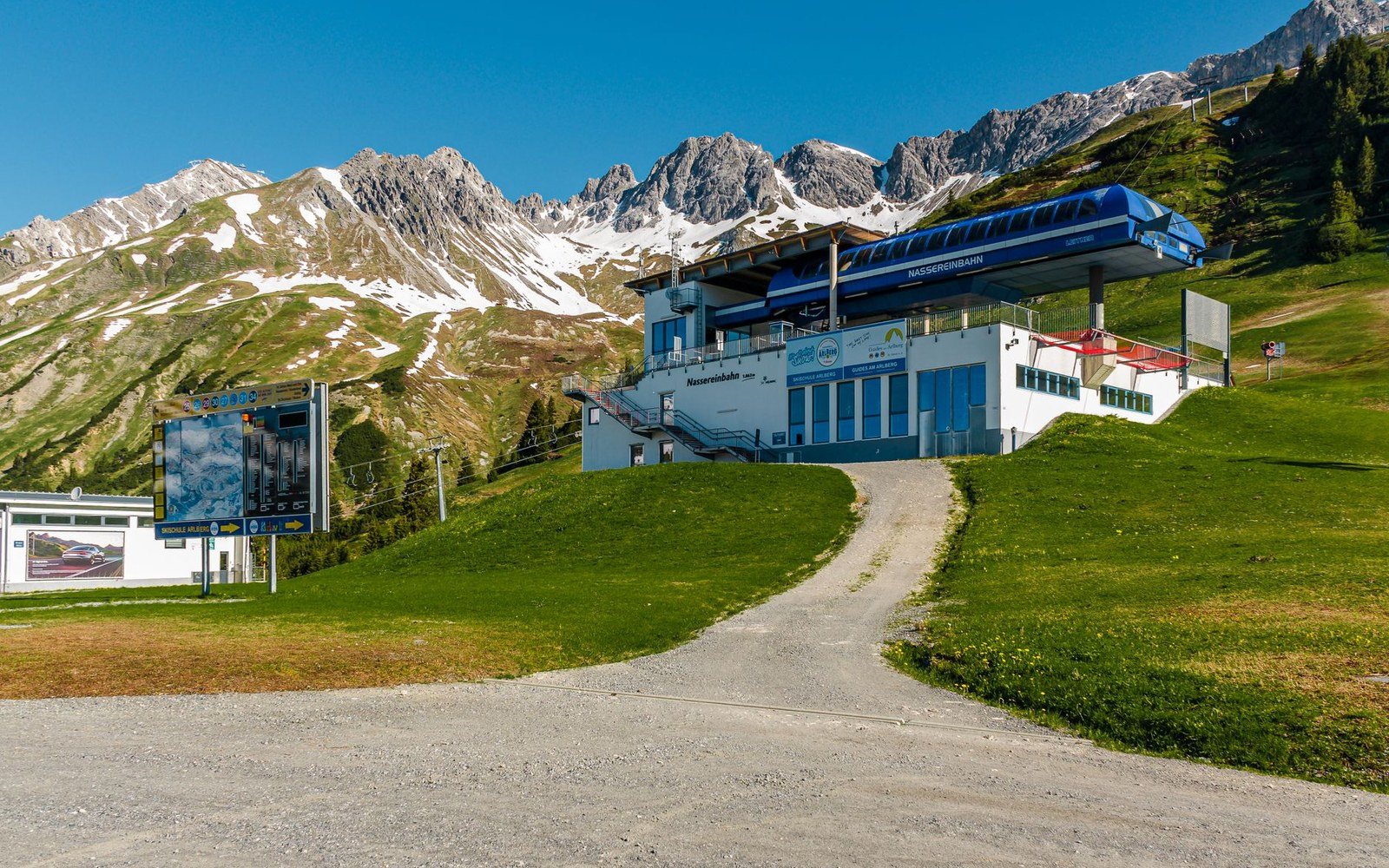
A hillside storage pond at the end of autumn. Snowmaking draws on water held here, which is why the ponds are permitted separately from the lifts they serve.Photo: Laura Manzi / PexelsThe turnstile is the instrument behind the industry’s headline figure: it counts passages, not people and not winters.Photo: Harry Dona / Pexels
La Morte ended the operation. That decision is an administrative act, not a demolition order.
What Stays Behind
The physical inventory of a closed ski area is substantial and does not vanish with the last lift-ticket sale. It falls into categories with distinct legal and cost implications.
Ski lifts are the most visible item. In France, a lift installed on public land under a concession de remontées mécaniques is typically transferred back to the conceding authority — in this case the commune itself — at the end of the concession, whether or not that end is voluntary. The structures: towers, cables, terminal buildings, electrical substations and the concrete anchors that hold them in the hillside, are real property. They can be sold for scrap value if a buyer can be found; they can be donated or sold to another operator; or they can simply sit on the land, in which case the commune carries the maintenance and safety-inspection obligations that French law imposes on infrastructure even when it is out of service. Towers that are not removed within a reasonable period after closure require periodic structural inspection to ensure they do not become hazards.
The inventory after closure
Ski lifts
towers, cables, terminals remain real property; inspection obligations continue under French law even when out of service
Retenues collinaires
hillside storage ponds subject to dam-safety regulation; decommissioning requires formal regulatory process, not just disuse
Grooming tracks and access roads
engineered earthworks that may erode without active management; require restoration before alternative uses become viable
Retenues collinaires — the hillside storage ponds built to supply snowmaking systems — present a different order of complication. These are engineered earthworks, typically holding several hundred thousand cubic metres of water, subject to dam-safety regulations administered by the French state. A pond that is no longer serving a snowmaking circuit is not simply an inert feature of the landscape. It must be maintained in structural integrity, inspected on a statutory cycle, and its water-management arrangements — intake, overflow, draw-off — kept functional or formally decommissioned under regulatory supervision. The question of what happens to retenues collinaires when the ski season they were built to serve ends is one the French regulatory framework is only beginning to address systematically, because until recently closures were rare enough not to generate standard procedure.
Grooming tracks, access roads and the earthworks that support them are a third category. A dameuse — the tracked piste-basher that operates overnight to groom and compact ski runs — needs a prepared surface to work on, and that surface is itself an artefact: graded, compacted, sometimes armoured against the erosion that the removal of vegetation invites. When the piste-bashing operation stops, the earthwork remains. If left unmanaged it may erode, sending material down into watercourses and requiring remediation work. If the commune wishes to convert the terrain to summer use — hiking, mountain biking, grazing — it may need active restoration work before those uses are viable or safe.
The Public-Land Question
Beneath all of this lies a land-tenure question that is easy to overlook in the immediate politics of a closure decision. Much of the terrain operated as a ski area sits on public or semi-public land: communal land, land managed under forestry designations, occasionally land within or adjacent to a protected-area framework. The commune's right to operate a ski area on that land derived from its administrative role and from the concession structure. The right to use the land for other purposes, or to sell it or lease it, is governed by a separate body of law — public domain rules, forestry statutes, possible pre-emption rights held by neighbouring landowners or the state.
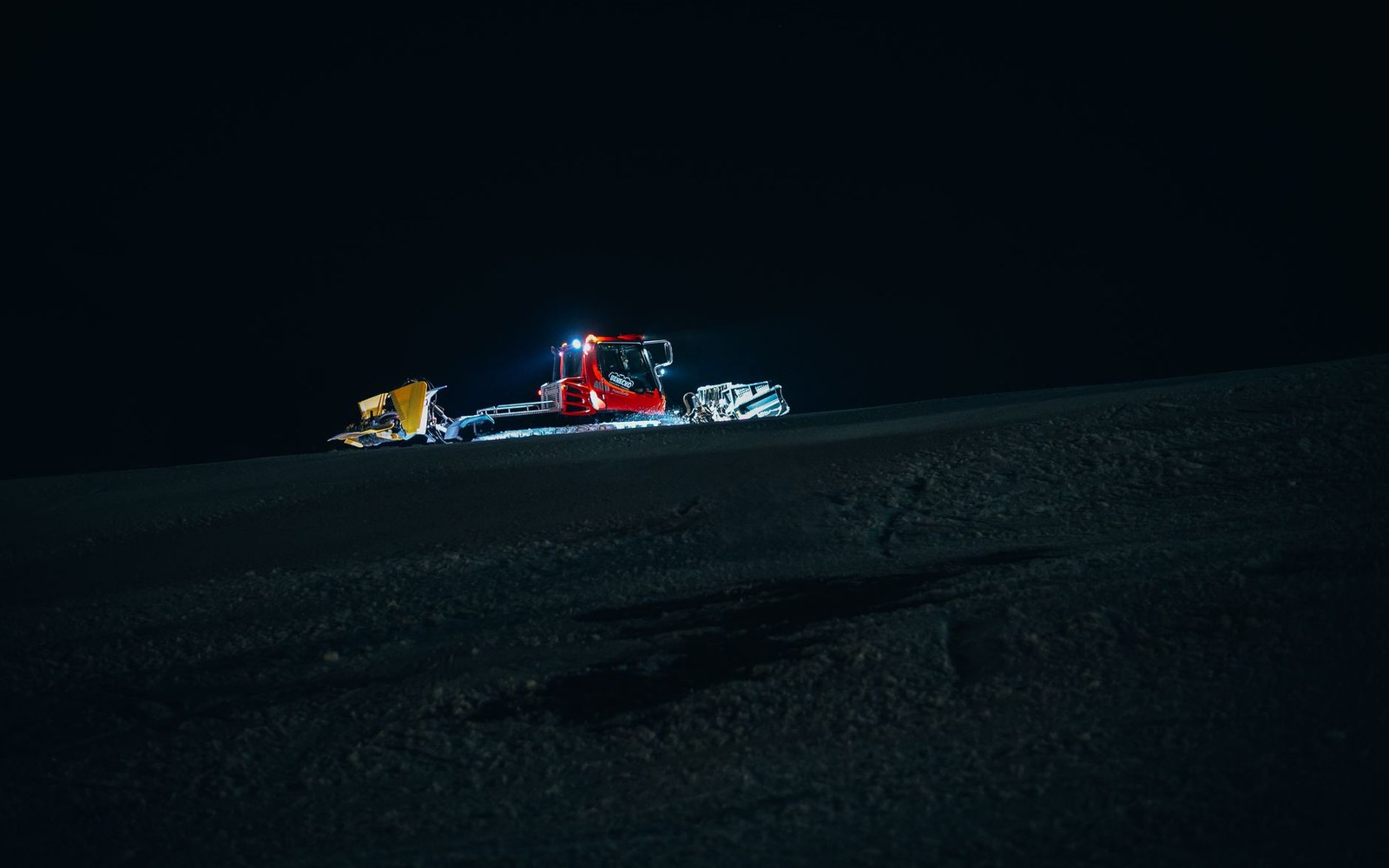
Grooming begins when the lifts stop. The night shift is one of the largest fixed labour lines in a ski area’s operating budget.Photo: Jan Kopřiva / Pexels
A commune that has closed its ski area and is looking at a hillside covered with unused towers, a pond that must be inspected every five years, and access roads that need maintenance cannot simply liquidate the asset as a private seller would. The Cour des Comptes, France's public audit institution, has in recent years shown increasing interest in the financial liabilities that municipalities carry from ski infrastructure; the La Morte situation, while small in national terms, represents the category of case that generates future audit attention precisely because the costs do not stop when the operation does.
There is also the question of what the land becomes. Summer use — walking, cycling, paragliding — generates revenue at a small fraction of the density that winter sport achieves per hectare of managed terrain. Rewilding, where it is politically and ecologically appropriate, generates no revenue at all but reduces ongoing maintenance liability once the restoration phase is complete. Agricultural use, particularly summer grazing consistent with the pastoral traditions of the Isère uplands, is possible on appropriate terrain but requires the removal of infrastructure that interrupts it. Each of these paths has a cost as well as an eventual disposition, and none of them is self-funding in the way that, for the first decades of the ski area's life, the winter operation was.
An Arithmetic the Plan Neige Did Not Anticipate
The Plan Neige — the French state programme from the 1960s that financed and directed the construction of purpose-built high-altitude resorts — built an assumption of perpetual winter into the institutional fabric of the Alpine mountains. The concession model, the municipal ownership structure, the snowmaking infrastructure, the access roads cut into hillsides: all of it was designed for a season that would reliably arrive and reliably support the investment. At high altitude, in the Tarentaise and the Écrins massif, that assumption remains broadly functional. At the altitudes where Alpe du Grand Serre operated, it does not. What La Morte now holds is not a failed business but a set of public obligations — structural, environmental and legal — that predate the closure decision and will outlast it by decades. The commune owns the infrastructure. The infrastructure, in a very real sense, still owns the commune.