Val d'Isère and Tignes share a ski area so high, and so thoroughly used for international competition, that 2030 Alpine events need little new infrastructure to find a home.
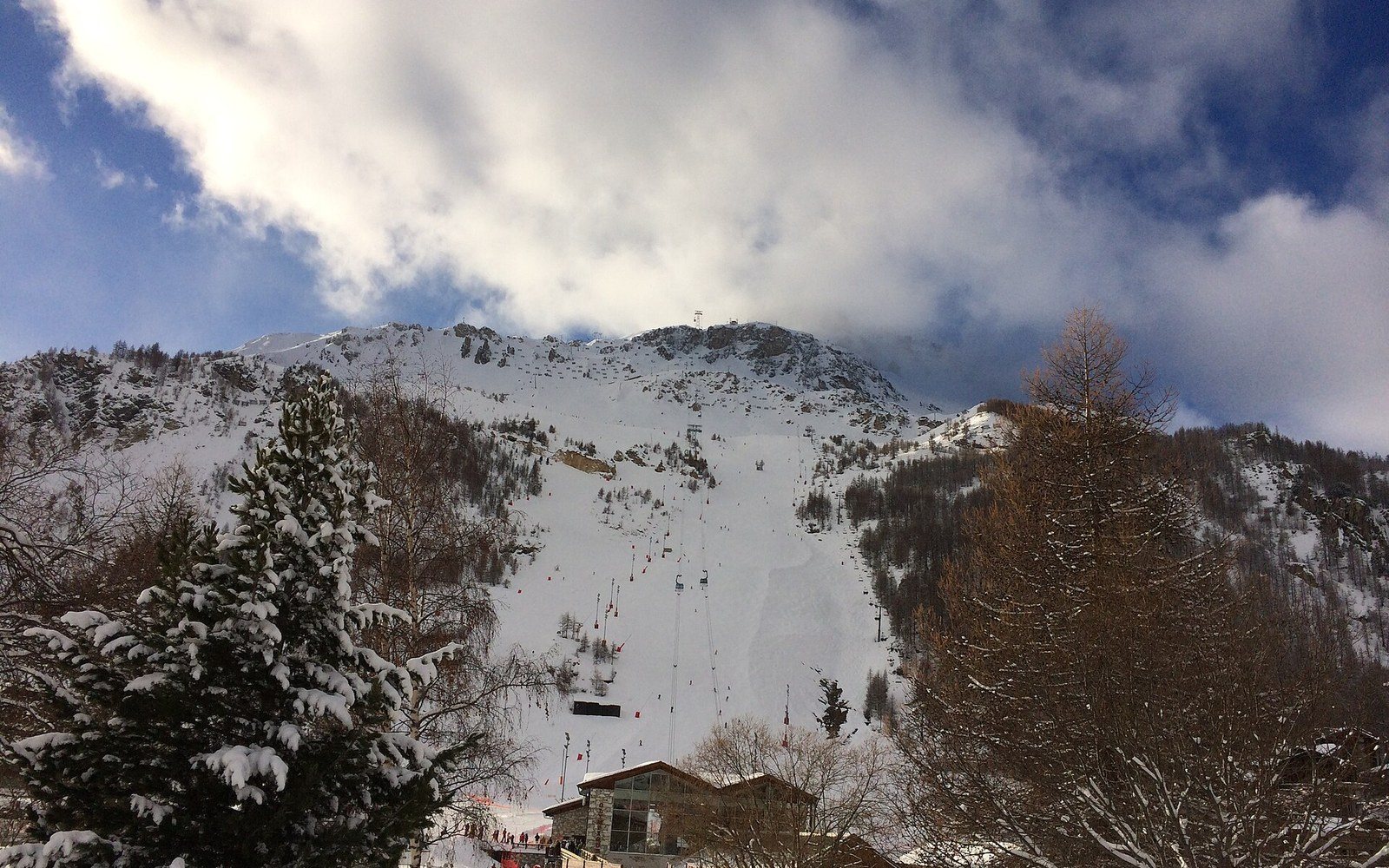
The Bellevarde face at Val d’Isère: a competition piste with the lift capacity a Games programme assumes.Photo: Face de Bellevarde 2014 · Wikimedia Commons
The Domain and Its Altitude
Espace Killy — named for Val d'Isère's Jean-Claude Killy, triple gold medallist at the 1968 Grenoble Winter Olympics — joins Val d'Isère and Tignes into a single interconnected domaine skiable across the Tarentaise valley in Savoie. The area sits between roughly 1,550 and 3,456 metres, with the Grande Motte glacier above Tignes providing the altitude that makes summer skiing and late-season racing viable when lower resorts have long closed. Météo-France's Climsnow projections consistently identify high-altitude Tarentaise terrain as among the most snow-reliable in the French Alps under mid-century climate scenarios, which is a material fact for any 2030 venue assessment.
Val d'Isère's Face de Bellevarde run has been the site of men's downhill and super-G competition at the World Cup level for decades, and its starting elevations place it well above the rising snow line that now threatens lower-altitude venues in the same region. The infrastructure already in place — timing equipment, finish-area structures, media facilities, lift capacity serving race terrain — represents capital investment that a newly designated Olympic venue would otherwise require from scratch.
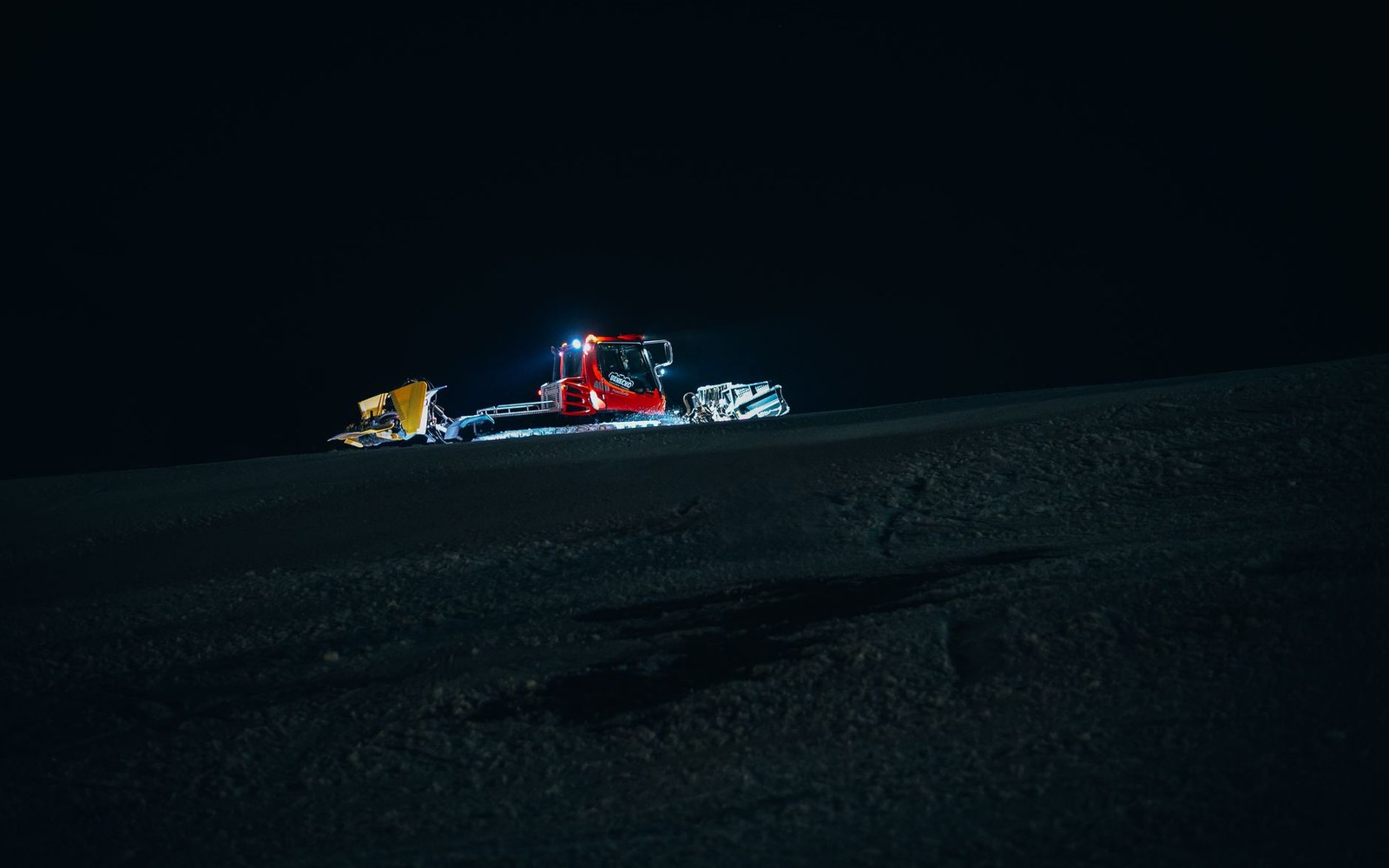
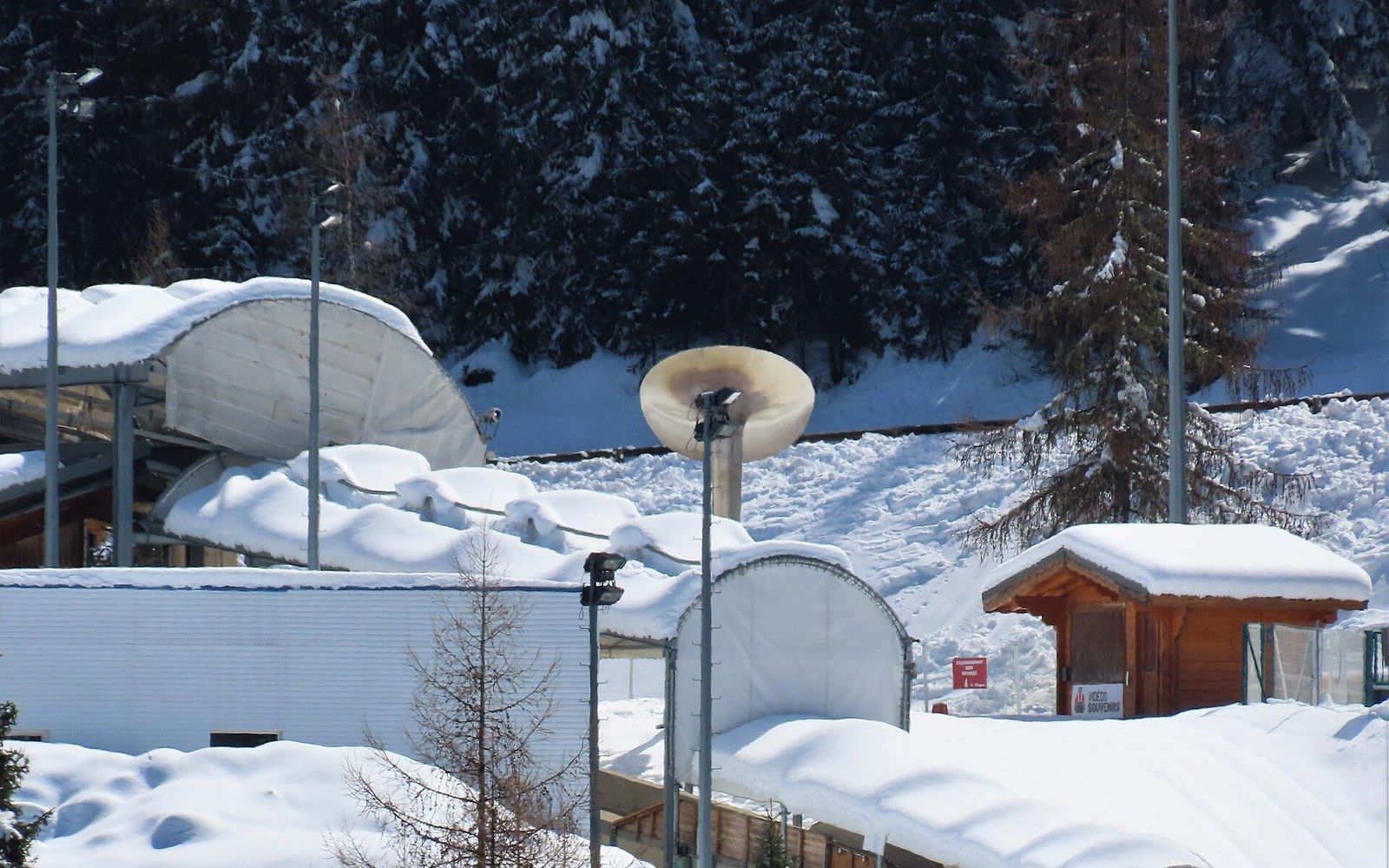
Grooming begins when the lifts stop. The night shift is one of the largest fixed labour lines in a ski area’s operating budget.Photo: Jan Kopřiva / PexelsThe channel runs about 1,500 metres down the north flank of Bellecôte, refrigerated along its whole length.Photo: Piste de bobsleigh, luge et skeleton de La Plagne 03 · Wikimedia Commons
The 2030 Calculation
The French Alps 2030 organising committee has positioned Espace Killy as a primary Alpine venue precisely because that investment exists. The IOC awarded the 2030 Games to the French Alps at its 142nd session in Paris in July 2024 on the explicit condition that state financial guarantees were in place — a condition that heightened scrutiny of every venue decision and its associated cost. Choosing a domain with demonstrable competition infrastructure is consistent with that pressure.
Domaines Skiables de France, the industry federation that publishes seasonal skier-day totals for French resorts, records Espace Killy among the highest-performing areas in the country by that measure, which reflects both lift capacity and the reliability of the snow cover at its operating altitudes. The Compagnie des Alpes, which holds operating interests across multiple French ski areas and now formally describes altitude as a portfolio asset, is the lift operator at Espace Killy through its Val d'Isère and Tignes subsidiaries, a commercial role distinct from the Games themselves — but the same logic of altitude as infrastructure underpins the domain's Olympic candidacy.
What Espace Killy brings to 2030 is essentially negative cost: a course that does not need to be built, a lift network that does not need to be extended, and a competition record that satisfies the IOC's venue qualification requirements without additional demonstration events. In a Games whose budget is already subject to scrutiny from the Cour des Comptes, that is a considerable argument.
Venue facts
Altitude range
Espace Killy operates from approximately 1,550 m (Tignes-les-Brevieres) to 3,456 m (Grande Motte glacier, Tignes)
Named for
Jean-Claude Killy, Val d'Isère native, three Alpine gold medals at Grenoble 1968
Key race venue
Face de Bellevarde, Val d'Isère; hosts FIS World Cup downhill and super-G
Operator structure
lift concessions held separately from Compagnie des Alpes
Climate position
Tarentaise high-altitude terrain rated among most snow-reliable in French Alps under Météo-France Climsnow projections