The Games · One track, one country, and four disciplines that need it
What the Auditors Are Looking At
The Cour des Comptes has a established record of examining Olympic budgets before the bills arrive. For 2030, it is asking the same structural questions it put to Paris 2024 — and the answers are not yet settled.
The audit question is not whether the venues exist but who carries the cost if the budget moves.Photo: Jude Ballado / Pexels
The Audit Body and Its Mandate
The Cour des Comptes — France's independent public audit institution — does not wait for Games to finish before scrutinising how they are financed. Its examination of Paris 2024 produced a series of published observations on cost allocation, on the boundary between public and private spending, and on the reliability of the guarantees underwriting the budget. Those observations are on the public record. The same institution is now in a position to apply an identical analytical lens to the French Alps 2030 bid, and there is no structural reason it would not.
The Cour's authority extends to any body that receives public funds. An organising committee for an Olympic Games draws on state contributions, regional council commitments and sometimes municipal allocations simultaneously. That layered financing is precisely what brings the institution into play: wherever public money moves through more than one tier of government toward a single project, the Cour has standing to examine how responsibilities and liabilities are divided.
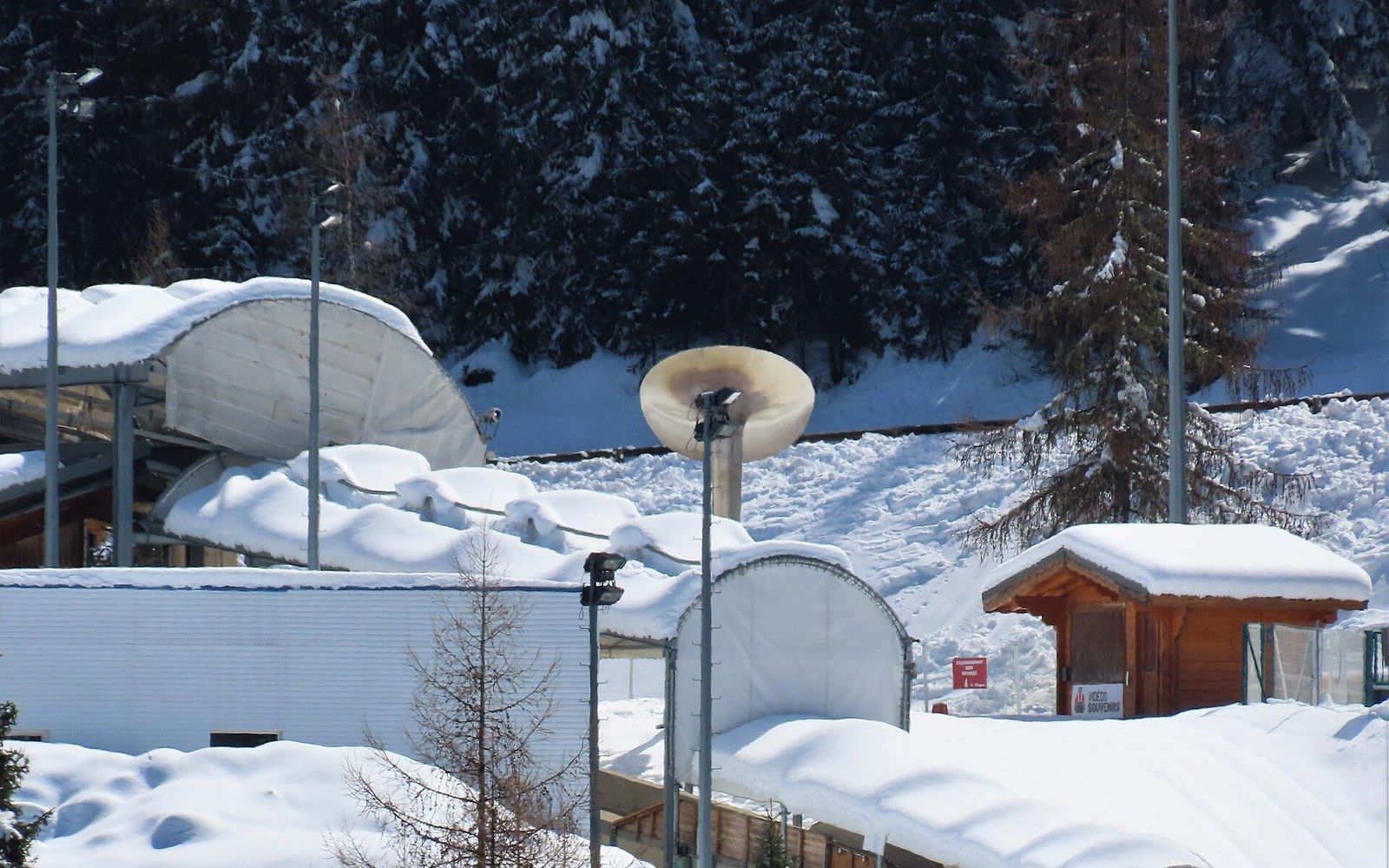
The channel runs about 1,500 metres down the north flank of Bellecôte, refrigerated along its whole length.Photo: Piste de bobsleigh, luge et skeleton de La Plagne 03 · Wikimedia CommonsGrooming begins when the lifts stop. The night shift is one of the largest fixed labour lines in a ski area’s operating budget.Photo: Jan Kopřiva / Pexels
A Budget Still Being Assembled
The IOC awarded the 2030 Winter Games to the French Alps at its 142nd session in Paris in July 2024, on the explicit condition that state financial guarantees be formalised. That condition — unusual in the history of Olympic awards — acknowledged that the guarantee structure was incomplete at the moment of award. A French Alps 2030 organising committee exists, but the full architecture of public commitments, covering which tier of government assumes liability for cost overruns in which venue category, remained under negotiation after the award was confirmed.
For the Cour des Comptes, this is the kind of gap that generates a formal interest. The audit institution's published work on Paris 2024 identified the separation of organisational budgets from public infrastructure costs as a structural opacity — a tendency for headline figures to understate eventual public exposure by treating venue construction or security costs as a separate account. The same risk profile applies to a multi-site, multi-regional Games spread across Savoie, Haute-Savoie, Isère and venues as geographically dispersed as Nice.
The sliding disciplines add a specific line of scrutiny. The La Plagne sliding track, built for the Albertville 1992 Games, has required continuous public subsidy for maintenance in the decades since, and its future for 2030 — whether to refurbish, rebuild, or relocate the bobsleigh, luge and skeleton events — carries a cost that does not fit neatly into any single budget category. A refrigerated concrete sliding track running year-round demands specialist maintenance funding that operates outside the seasonal logic of a ski resort. The Cour is in a position to ask who holds that liability across the life of the asset.
What Division of Costs Looks Like on Paper
The formal division of financial responsibility for a French Olympic Games typically runs across three layers: the organising committee's operational budget, covered by IOC contributions, broadcast rights and sponsorship; infrastructure budgets held by the state or its agencies; and venue-level commitments that fall to regional councils or, in some cases, to lift operators holding concessions de remontées mécaniques — fixed-term licences to run ski infrastructure on public land.
Domaines Skiables de France, the industry body representing French ski-area operators, publishes data on the economic scale of the sector in skier-days and lift turnover, but the relationship between that commercial infrastructure and the public investment required to Games-standard it is not the same thing. The Cour's interest lies precisely in the join between them: where the organising committee's budget ends and the public infrastructure account begins.
That boundary, as of the award, had not been drawn with the precision that would satisfy an audit institution. The Cour des Comptes does not need to be invited to examine it. Its mandate is broad enough, and its record on Olympic financing detailed enough, that the question of who ultimately pays — and who has signed to say so — will be put on the record well before the opening ceremony.
Chronology
July 2024IOC 142nd session, Paris: French Alps awarded 2030 Winter Games with an explicit state-guarantee condition attached
1992Albertville Winter Games; La Plagne sliding track constructed; subsequent decades of maintenance subsidy follow
Paris 2024Cour des Comptes publishes observations on Olympic cost allocation and public exposure; establishes the analytical model for 2030 scrutiny