Every French Alps Winter Games has left behind a physical object the host region did not fully budget to maintain. The 2030 programme argues it will not repeat that pattern — a claim each of its predecessors also made.
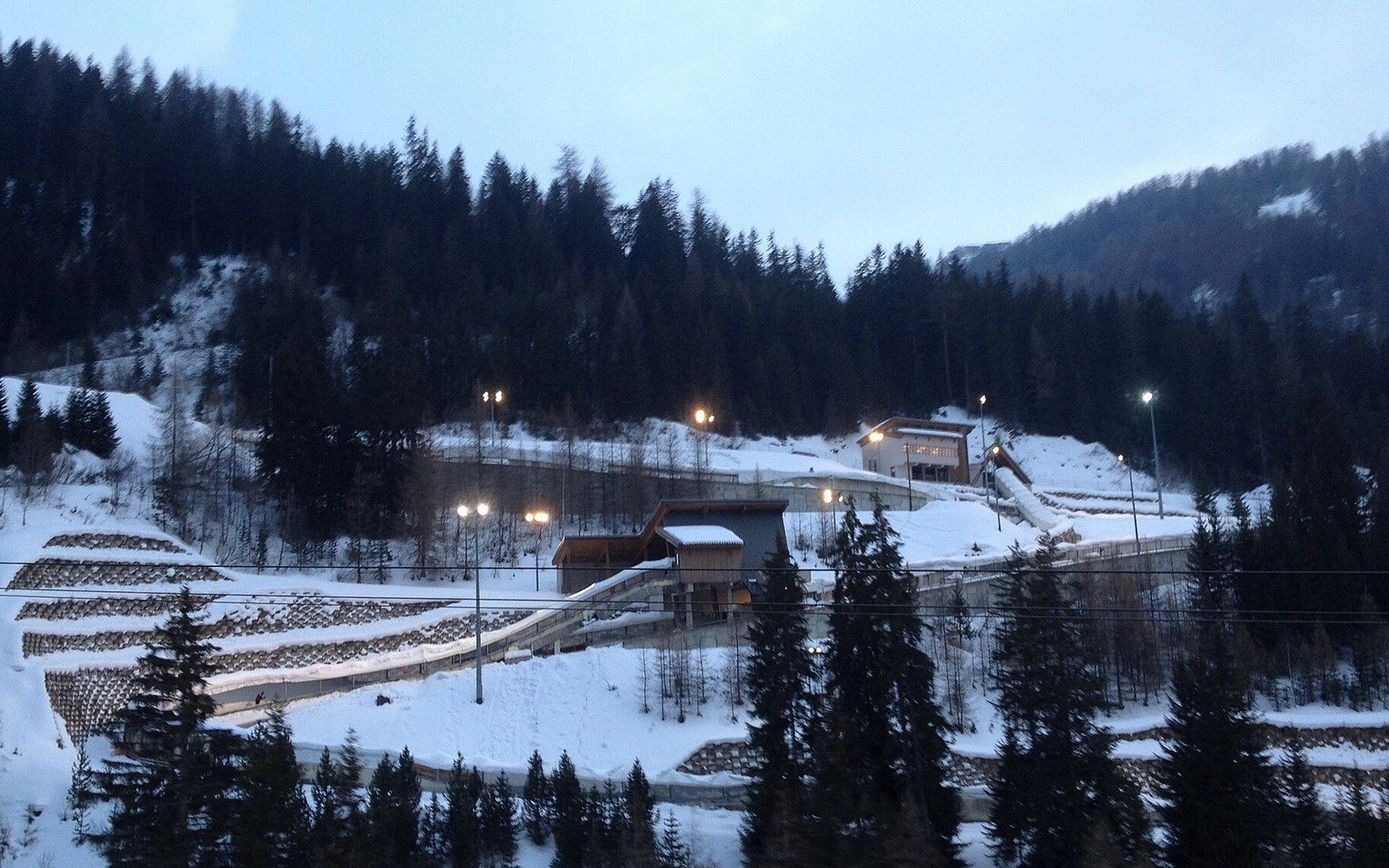
Albertville’s legacy in concrete. Each of the three French Winter Games left an object that had to be maintained afterwards.Photo: Piste de bobsleigh de La Plagne · Wikimedia Commons
What Three Olympics Actually Built
The first Winter Olympics, held in Chamonix in January and February 1924, were organised under the title "Semaine Internationale des Sports d'Hiver" — International Week of Winter Sports — before the International Olympic Committee retroactively conferred Olympic status. The infrastructure demand was modest by later standards: Chamonix already functioned as a mountain resort, and most venues were adaptations of existing terrain rather than new construction. The exception was the bobsleigh run cut into the hillside above the town, a track that defined the sliding-discipline problem the region would carry for the rest of the century. That original course was abandoned long before Albertville; what Chamonix 1924 left was less a building than a precedent — the expectation that a Winter Games requires a sliding track, full stop.
Grenoble 1968 operated at a different scale entirely. The city, the capital of Isère, was awarded the Games in January 1964 and used the event to accelerate urban infrastructure that planners wanted anyway: a ring road, a modernised airport, upgraded rail links. The competition venues were scattered across the surrounding massifs — Chamrousse for alpine ski racing, Autrans for the nordic events, Villard-de-Lans — so no single concentrated Olympic district was built. What the city retained was chiefly the improvements to Grenoble itself, which is one reason the 1968 Games are often cited as a relatively benign economic precedent. The skating venue, the Palais des Sports, remained in municipal use for decades. The legacy cost was real but distributed, and much of it overlapped with infrastructure the city needed regardless of the Games.
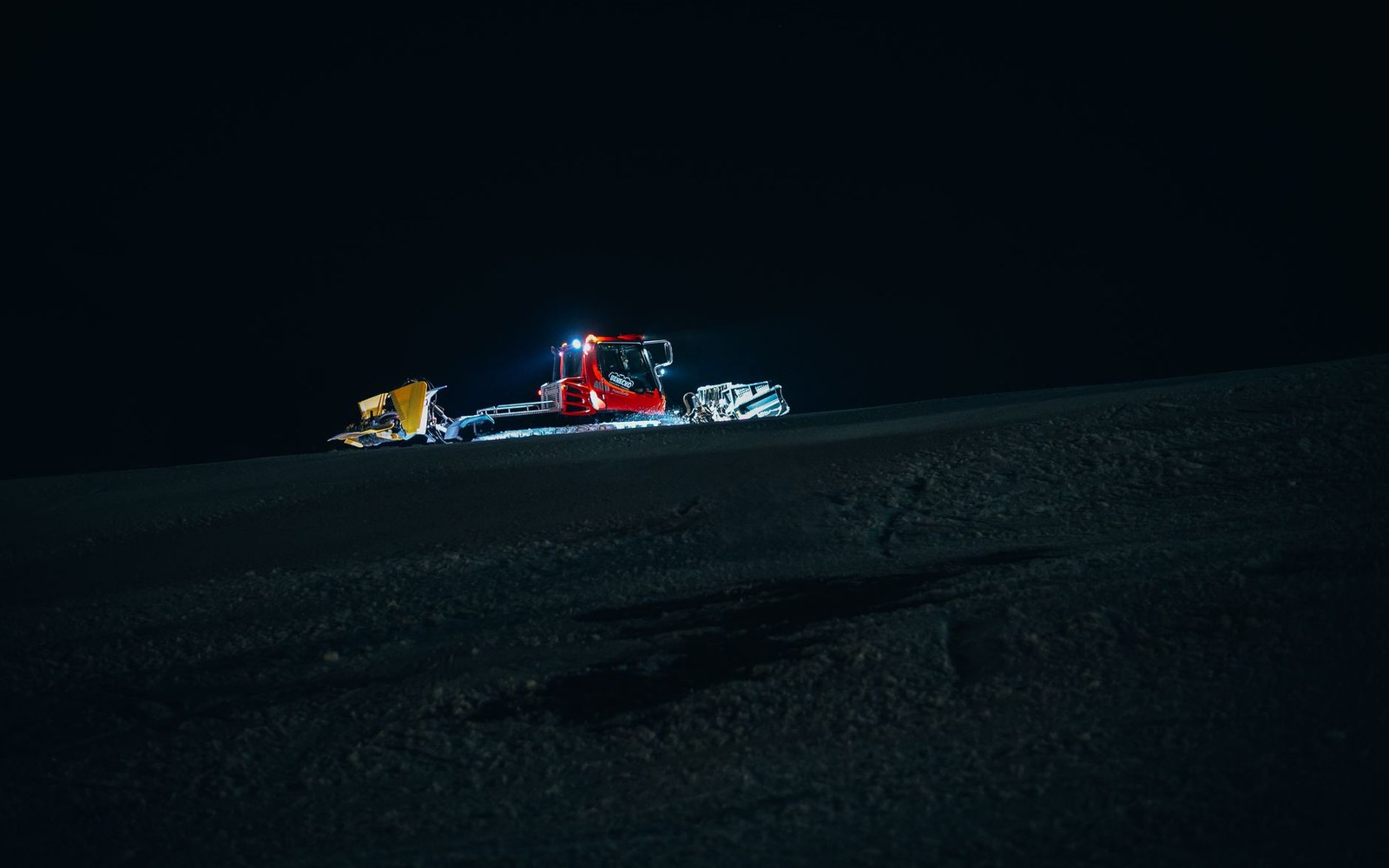
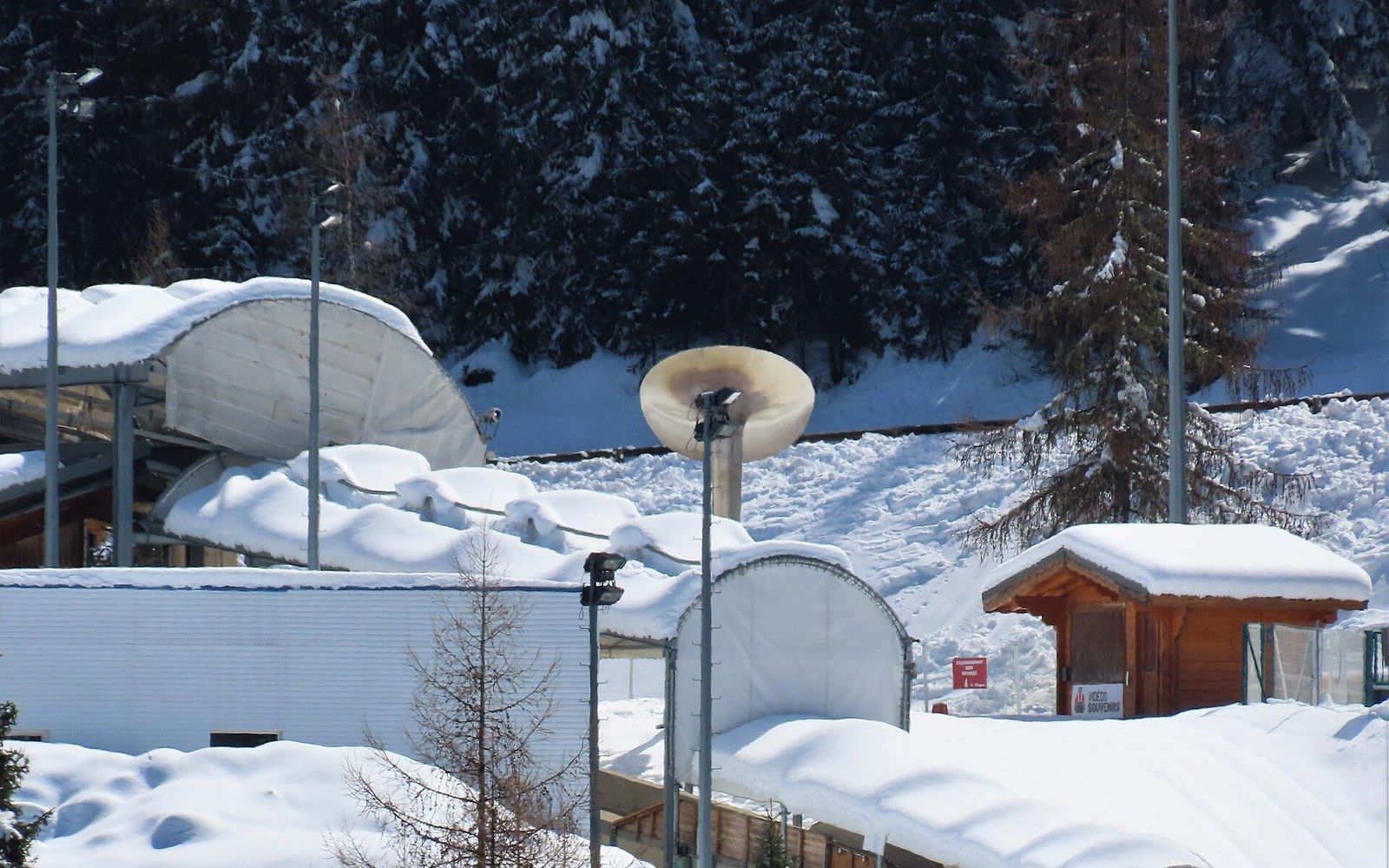
Grooming begins when the lifts stop. The night shift is one of the largest fixed labour lines in a ski area’s operating budget.Photo: Jan Kopřiva / PexelsThe channel runs about 1,500 metres down the north flank of Bellecôte, refrigerated along its whole length.Photo: Piste de bobsleigh, luge et skeleton de La Plagne 03 · Wikimedia Commons
Albertville 1992 is the inheritance the 2030 planners talk about most carefully, and for good reason. The Tarentaise valley and its surrounding resorts received a concentrated burst of venue construction: the main Olympic stadium in Albertville, the speed-skating oval in Albertville, the ice hall at Méribel, the freestyle moguls venue at Tignes and the biathlon venue at Les Saisies, and — the object that came to define the post-Games accounting problem — the sliding track at La Plagne. That refrigerated concrete course was built specifically for bobsleigh, luge and skeleton competition. It requires year-round cooling infrastructure, specialist maintenance staff and a continuous operational subsidy to stay open between competitions. The Cour des Comptes, France's independent public audit institution, has examined the long-run cost of maintaining the La Plagne facility across its post-1992 life, and the conclusions have not been comfortable for the model of building new sliding infrastructure for each Games cycle. The track survived; so did the financial obligation attached to it.
The 2030 Argument and Its Limits
The organising logic of the 2030 programme rests explicitly on not building what 1992 built. The venue framework, as confirmed when the IOC awarded the Games to the French Alps at its 142nd session in Paris in July 2024, leans on existing infrastructure — the high-altitude ski areas of the Tarentaise and Haute-Savoie for alpine disciplines, venues with established competition records for nordic events, and the Aiguille du Midi and Vallée Blanche corridor in Chamonix for the setting rather than for any new facility. The operating licences — concessions de remontées mécaniques — that govern the ski lifts at Val d'Isère, Tignes, Courchevel and Méribel are held by operators who run those lifts commercially before and after any Games, so the maintenance burden does not fall on the state once the closing ceremony is over. That is the theory, and it is structurally sounder than what was proposed in 1992.
The sliding-track question is where the theory meets its hardest test. Three options have circulated in public discussion: refurbish the existing La Plagne track, build a new facility, or hold the sliding events abroad. Each carries a different inheritance risk. A new track would repeat 1992's error directly. A refurbished track restores a facility already carrying a maintenance obligation, though it avoids making that obligation larger. Sending athletes abroad — to an existing international venue — would break the pattern entirely, at the cost of a visible gap in the host programme. The IOC's July 2024 award came with conditions attached, and the sliding question was among the unresolved items, which is itself a form of institutional acknowledgement that the precedent is not easily escaped.
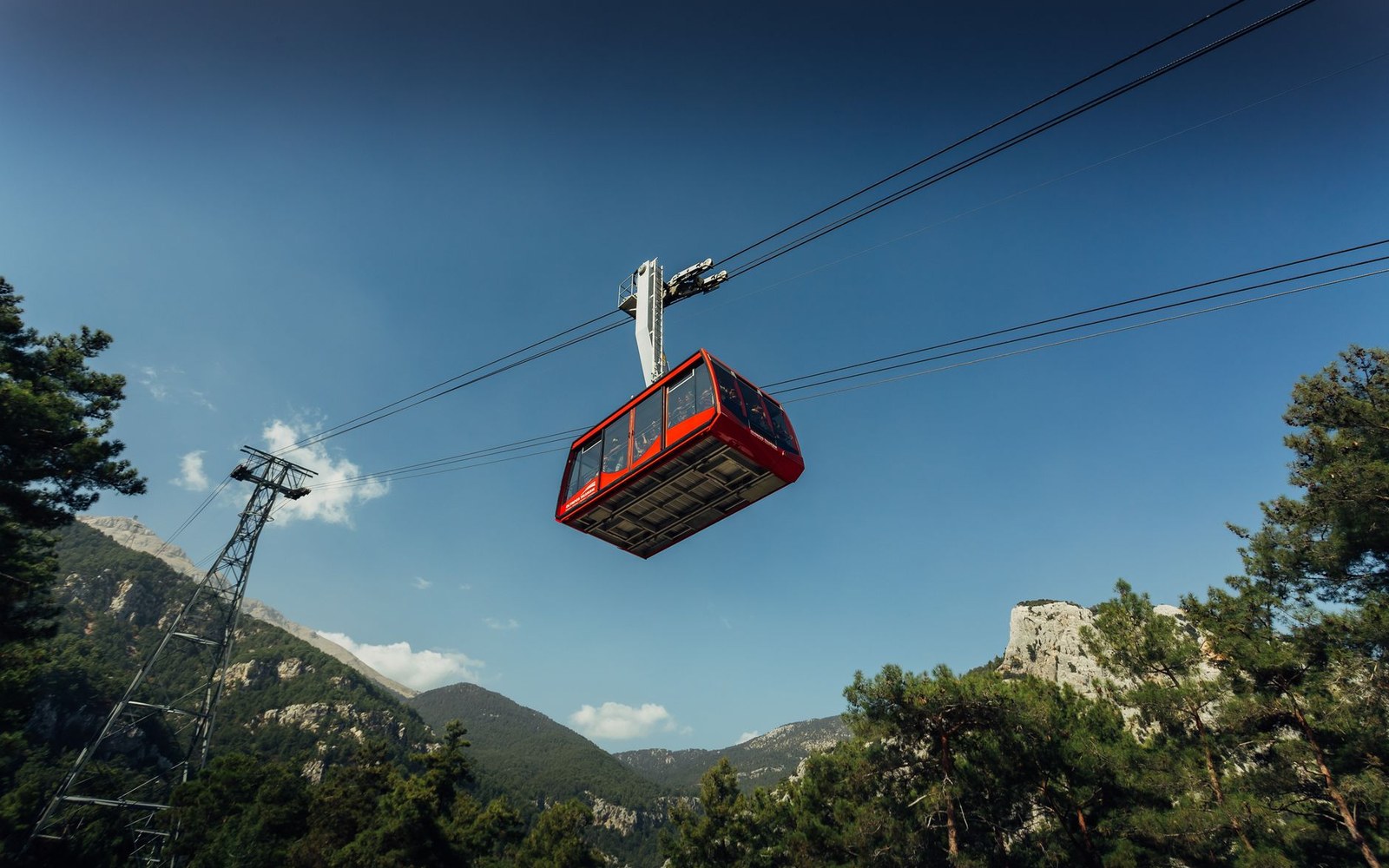
A pylon anchored in bare granite. High on the mountain it is the rock, not the snow, that decides where a lift can stand.Photo: Ilya Lisauskas / Pexels
What Survives and What It Costs
The honest accounting of Alpine Games legacies requires separating physical survival from financial sustainability. The two later events left objects that survived: Grenoble's Palais des Sports, the Méribel ice hall from 1992, the La Plagne sliding track. Survival is not the same as success. A facility that requires annual public subsidy to remain operational is a legacy in the technical sense — it is still there — but it is also a recurring charge on municipal or regional budgets that were not designed to carry it.
Domaines Skiables de France, the industry body that tracks French ski-area economics using the skier-day as its headline measure, has documented the structural pressure on mid- and lower-altitude stations over the past two decades. That pressure is separate from the Olympic legacy question, but it creates the context in which any new public commitment to maintain a venue must be read. A region managing a rising snow line, as Météo-France's Climsnow projections detail, and a shrinking base of commercially viable lower-altitude operations, is not well positioned to absorb another fixed infrastructure cost of the La Plagne kind.
The 2030 planners' answer is that altitude itself is the asset — that the venues proposed are the same ones that generate commercial revenue fifty weeks a year, and that the Games add intensity to existing infrastructure rather than creating new obligations. Compagnie des Alpes, the largest operator of French ski areas, has positioned its high-altitude portfolio in precisely those terms in recent years. The claim is plausible for the alpine ski events. It is less plausible for any facility that has no commercial life outside a competition calendar.
Chamonix's inheritance in 1924 was a precedent. Grenoble's in 1968 was a city that developed faster than it otherwise would have, at a cost that was partly absorbed by urban growth. Albertville's in 1992 was a refrigerated concrete tube in the Tarentaise that still sends invoices. The 2030 programme was designed to belong to the second category, or to none of these. Whether the sliding question is resolved in a way that makes that argument hold is the test the auditors at the Cour des Comptes will eventually be asked to grade.
Chronology
1924First Winter Olympics, Chamonix; bobsleigh run cut above the town; Olympic status granted retroactively by the IOC
1963Grenoble awarded the 1968 Winter Games
1968Grenoble Games; venues distributed across Chamrousse, Autrans, Villard-de-Lans; Palais des Sports retained by city
1992Albertville Games; sliding track built at La Plagne; ice hall at Méribel; speed-skating oval at Brides-les-Bains
July 2024IOC 142nd session, Paris; French Alps confirmed as 2030 host with conditions attached, sliding venue unresolved